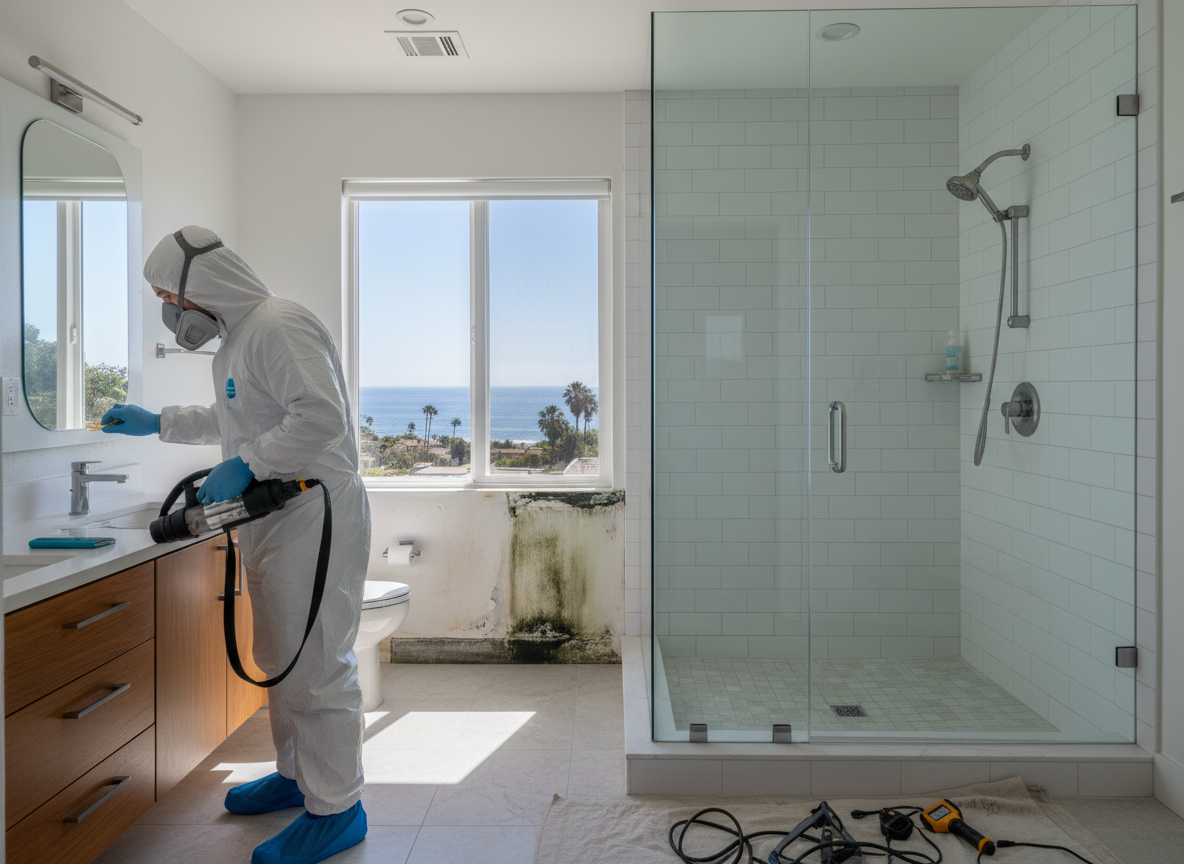
Balboa Island homes sit right on Newport Bay with constant exposure to tidal humidity and fog that seeps into crawl spaces and wall cavities. Our team based at 2929 Pacific Coast Hwy responds within hours to contain growth before it spreads through the tightly packed 1920s to 1950s cottages and bungalows that dominate the island. We route equipment across the single bridge or via ferry access points to reach properties where standard trucks cannot park.
Winter rains followed by warm dry summers create repeated condensation cycles inside these older structures, especially along Marine Avenue and the interior canals. We focus on removing affected insulation and drywall while protecting the surrounding bay water from runoff during extraction. Every job accounts for the limited lot sizes and shared walls that make containment more involved than in mainland Corona del Mar neighborhoods.
Residents on Balboa Island call us when musty odors appear after high tides or when visible spots show up near foundation vents. We map moisture with meters calibrated for coastal wood-frame construction and dry the structure using targeted air movers sized for narrow hallways and steep staircases common here.
Around Balboa Island
We regularly work near:
- 📍Marine Avenue
- 📍Balboa Island Park
- 📍Balboa Island Ferry terminal
- 📍Little Balboa Island
- 📍Newport Bay shoreline along the island perimeter
- 📍Park Avenue
Mold Remediation Service Corona Del Mar in Balboa Island — Local Notes
- •Many Balboa Island homes rest on bay fill with shallow crawl spaces that trap moisture from rising damp and poor drainage toward the canals.
- •Narrow streets and one-way loops around the island require smaller drying equipment and staged material removal to avoid blocking Marine Avenue or Park Avenue access.
- •Older single-wall construction and original plaster allow mold to travel vertically between floors faster than in newer framed houses found in Corona Highlands.
- •Proximity to Newport Bay means salt air accelerates corrosion on HVAC components, so we inspect ductwork for hidden growth after every winter storm season.