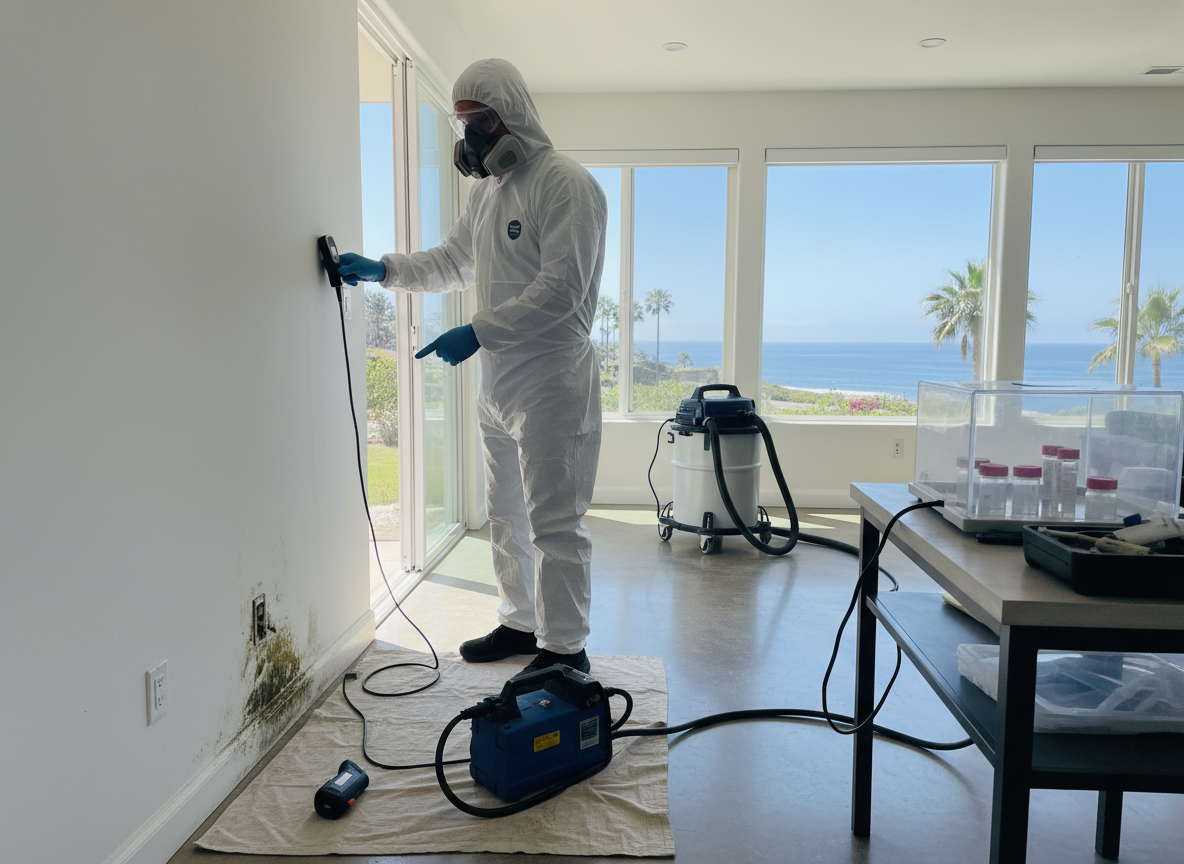
Corona Del Mar homes built before the 1980s often feature single-pane windows, older rooflines and stucco exteriors that allow wind-driven rain from the Pacific to reach sheathing during cool wet winters. An inspection must check attic spaces above Corona del Mar Village bungalows and crawl spaces in Corona Highlands where humidity lingers after storms. Technicians look for condensation on ductwork and must distinguish between harmless efflorescence and active growth on drywall paper.
The mild Mediterranean climate means summer inspections focus on irrigation overspray near Sherman Library and Gardens properties and on homes along the Corona del Mar Bluff Path where ocean air keeps exterior walls damp. Inspectors use moisture meters on baseboards and thermal imaging behind bathroom vanities because visible discoloration is rare until damage is advanced. Orange County building practices from earlier decades left many residences without proper vapor barriers, so hidden mold behind tile is common when leaks develop.
During an inspection, every accessible area is documented with photos and readings so homeowners receive a clear map of problem zones rather than a generic report. Edge cases include mold in HVAC returns serving second-story additions common in Irvine Terrace and growth inside wall cavities after roof repairs that were never fully dried. The process avoids opening walls unnecessarily while still identifying the full extent of any moisture source.
Seasonal Moisture Patterns
Wet winters bring repeated rain events that saturate soil around foundations near Newport Beach and Laguna Beach borders, raising indoor humidity in lower levels. Summer inspections shift attention to air-conditioning condensate lines that can overflow in attics when filters are neglected.
Technician insight
In Corona Del Mar, the thing that catches most people out with Mold Inspection is how the cool wet winters soak older stucco walls in neighborhoods like Corona Highlands and Irvine Terrace, then the warm dry summers hide the moisture until it shows up inside closets or behind baseboards months later.
Attic Moisture Near Bluff Path
A homeowner in a 1960s home along the Corona del Mar Bluff Path noticed musty smells after winter rains. Inspection found elevated moisture in the attic from a small roof leak that had wicked into insulation. Samples confirmed limited mold growth; the report outlined targeted drying and repair steps before any broader remediation was needed.
How it works
- 1
Initial Walk-Through
Survey exterior grading, roof edges and window seals around the property while noting proximity to Corona del Mar State Beach salt air exposure.
- 2
Moisture Mapping
Use meters and infrared on walls, ceilings and floors in every room, paying special attention to bathrooms and areas below flat roofs typical in older Corona del Mar stock.
- 3
Air and Surface Sampling
Collect samples from suspect areas and compare to outdoor baselines to determine whether indoor spore levels indicate active growth.
- 4
Report and Recommendations
Deliver a written summary with photos, moisture readings and prioritized next steps for any findings.
Pricing
Inspection cost varies with home size and number of samples required; most Corona Del Mar properties fall into a mid-range bracket because of typical square footage and access challenges.