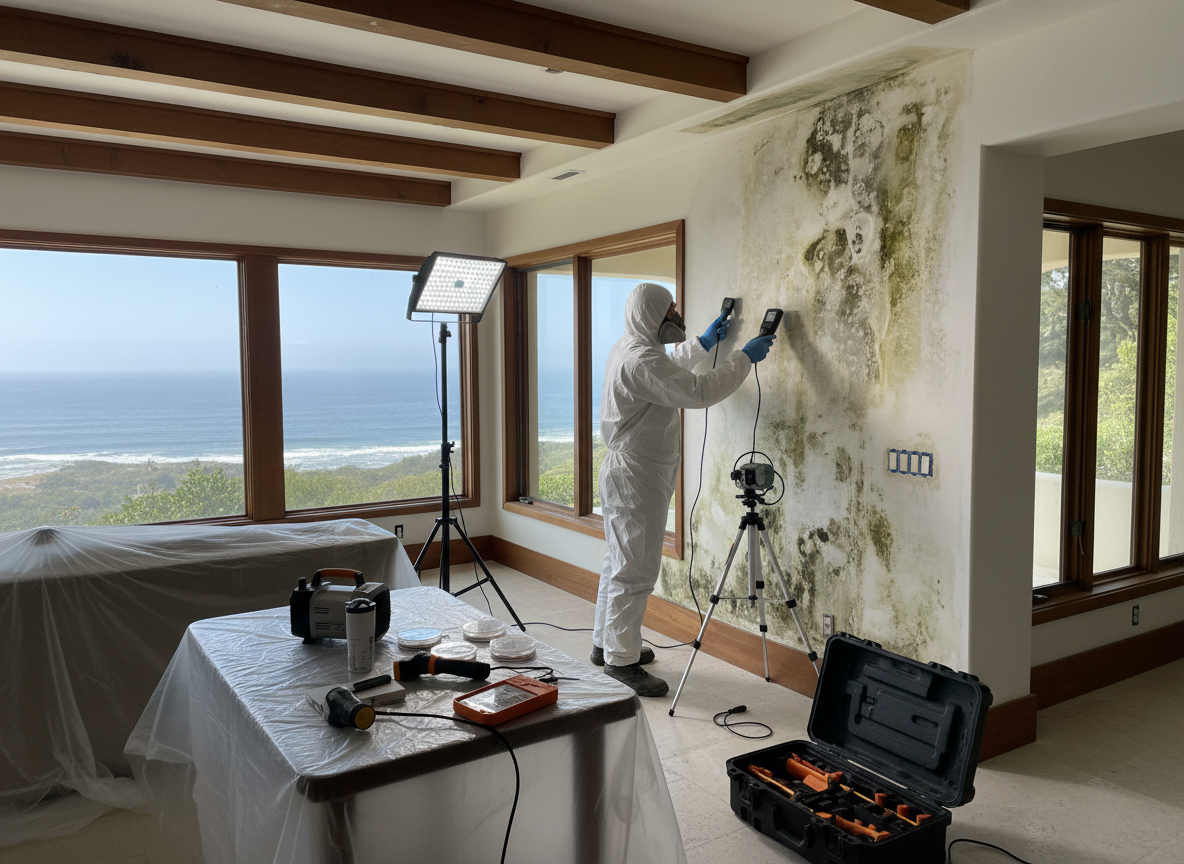
Corona Del Mar homes in neighborhoods such as Corona del Mar Village and Irvine Terrace often feature older wood-frame construction and hillside lots that trap moisture during the region’s cool, wet winters. A proper inspection starts with checking roof decks, attic insulation, and foundation vents where fog and rain from the Pacific frequently drive humidity into framing. Technicians use moisture meters and borescopes to locate hidden growth behind drywall or under flooring without unnecessary demolition.
The mild Mediterranean climate means mold risk spikes from November through March when rainfall and coastal fog keep relative humidity elevated for weeks. Homes near Corona del Mar State Beach or along the Bluff Path commonly show issues in bathrooms and laundry rooms where exhaust fans vent into attics rather than outside. Inspectors also evaluate drainage around the foundation, noting how clay-heavy soils in Corona Highlands slow water runoff and keep crawl spaces damp longer than inland Orange County properties.
Inspection reports include photos, moisture readings, and a prioritized list of affected materials so homeowners can address the source before any remediation begins. Because many homes sit on bluffs or near Sherman Library and Gardens, inspectors pay special attention to stucco cracks and window flashing that allow wind-driven rain to penetrate. The process avoids disruption to daily life while giving clear next steps for properties in nearby Newport Beach and Laguna Beach that share similar coastal exposure.
Technician insight
In Corona Del Mar, the thing that catches most people out with Home mold inspection is how the cool, wet winters push fog and rain into the older hillside homes along the Bluff Path and in Corona Highlands, where stucco cracks and poor attic venting let moisture sit for months before any musty smell appears.
Bathroom Wall Inspection After Winter Rains
A homeowner in Corona del Mar Village noticed a persistent musty odor in the upstairs bathroom following several weeks of rain. Inspection revealed elevated moisture in the exterior wall shared with the bluff exposure. Moisture mapping and borescope work identified hidden growth behind tile and in the subfloor. The report outlined the source and recommended targeted drying before any removal work began.
How it works
- 1
Initial Walkthrough
Technician reviews visible areas, notes musty odors, water stains, and ventilation issues while walking through every room and the exterior perimeter.
- 2
Moisture and Humidity Testing
Readings are taken with calibrated meters in attics, crawl spaces, bathrooms, and around windows to map active moisture sources tied to winter rains.
- 3
Hidden Area Inspection
Borescope and thermal imaging locate growth behind walls or under floors common in older Corona Del Mar Village construction.
- 4
Report and Recommendations
Written findings detail locations, materials affected, and suggested remediation steps without any remediation work performed during the inspection.
Pricing
Pricing varies by home size, age, and number of stories; most Corona Del Mar inspections fall in a mid-range that reflects the extra time needed for hillside access and older construction details.