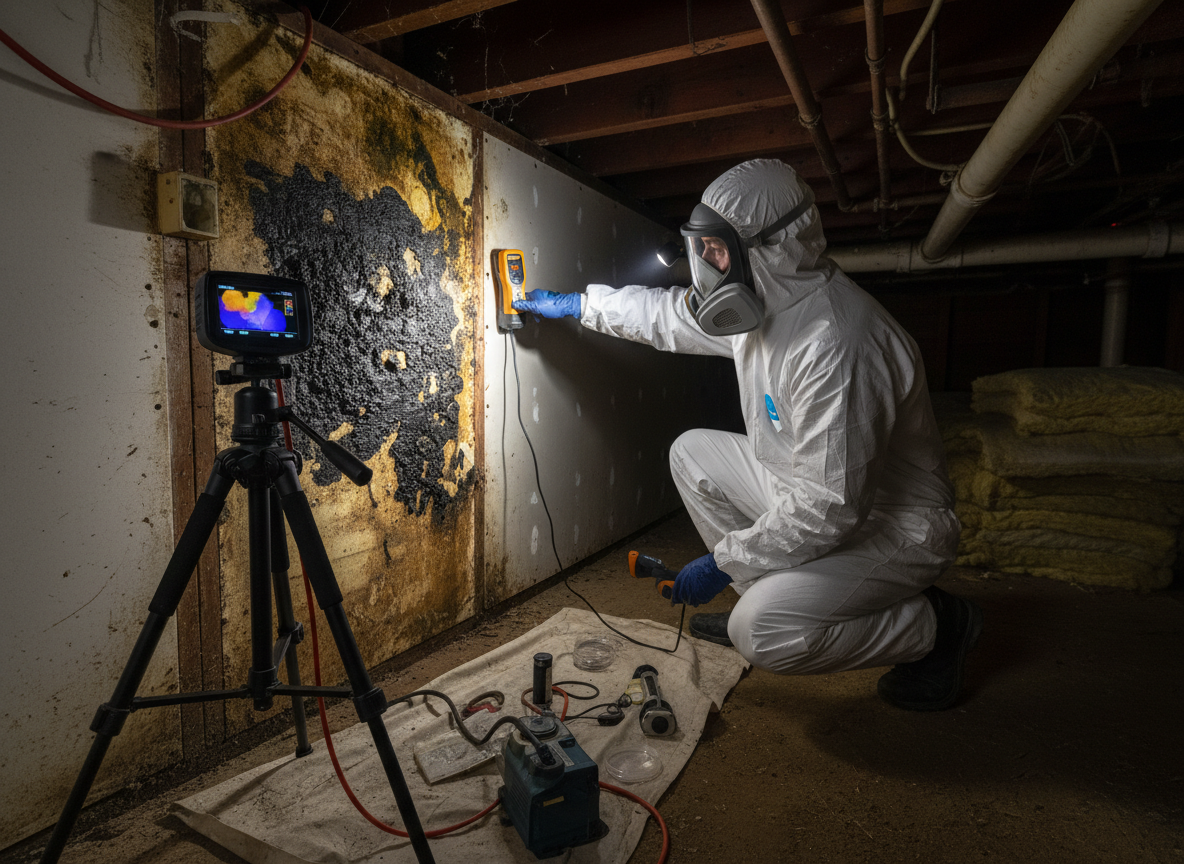
Corona Del Mar's mild Mediterranean climate brings cool wet winters that drive moisture into older stucco and wood-frame homes built along the Bluff Path and in Corona Highlands. Salt air from nearby Corona del Mar State Beach accelerates corrosion in HVAC ducts and crawlspace vents, creating hidden pockets where black mold thrives behind walls. Inspections must account for these coastal conditions rather than generic moisture checks used inland.
In Irvine Terrace and Corona del Mar Village, many residences sit on sloped terrain that channels winter runoff toward foundations. This leads to repeated wetting of sill plates and insulation, especially in homes adjacent to Newport Beach and Laguna Beach borders. A proper black mold inspection includes thermal imaging of these grade changes and targeted air sampling in attics where warm dry summers trap residual humidity after storms.
Orange County building practices from earlier decades often left limited ventilation in bathrooms and laundry areas. Black mold frequently appears first in these spots when seasonal rains exceed normal patterns. Inspectors check for code-compliant vapor barriers and note any prior repairs that may have sealed moisture inside wall cavities near Sherman Library and Gardens properties.
Seasonal Moisture Patterns
Winter storms in Corona Del Mar push humidity into single-story ranch homes more than multi-level builds, requiring inspectors to lift carpet edges and check under sinks in utility rooms facing the ocean.
Technician insight
In Corona Del Mar, the thing that catches most people out with black mold inspection is how the cool wet winters push moisture under the slab in 1950s-60s homes in Corona Highlands, then the warm dry summers bake it into the drywall paper where you can't see it without pulling baseboards.
Crawlspace Odor After Winter Rains
A residence in Irvine Terrace reported persistent musty smells following heavy winter precipitation. Inspection revealed black mold growth on insulation where runoff from the sloped lot entered the crawlspace. Targeted sampling confirmed the species and extent. Homeowner received a detailed report outlining removal steps matched to local drainage realities.
How it works
- 1
Site Walk and Visual Survey
Examine exterior grading, roof edges, and interior wet zones in neighborhoods like Corona Highlands for signs of prior water intrusion.
- 2
Moisture Mapping
Use meters and infrared cameras on walls, floors, and HVAC returns to locate elevated readings tied to winter rain patterns.
- 3
Air and Surface Sampling
Collect samples from suspect areas near the Bluff Path and submit for lab analysis to confirm black mold presence.
- 4
Findings Report and Next Steps
Deliver written results with location-specific recommendations for remediation in Orange County coastal homes.
Pricing
Cost depends on square footage, number of samples, and access challenges in hillside or bluff-adjacent properties.