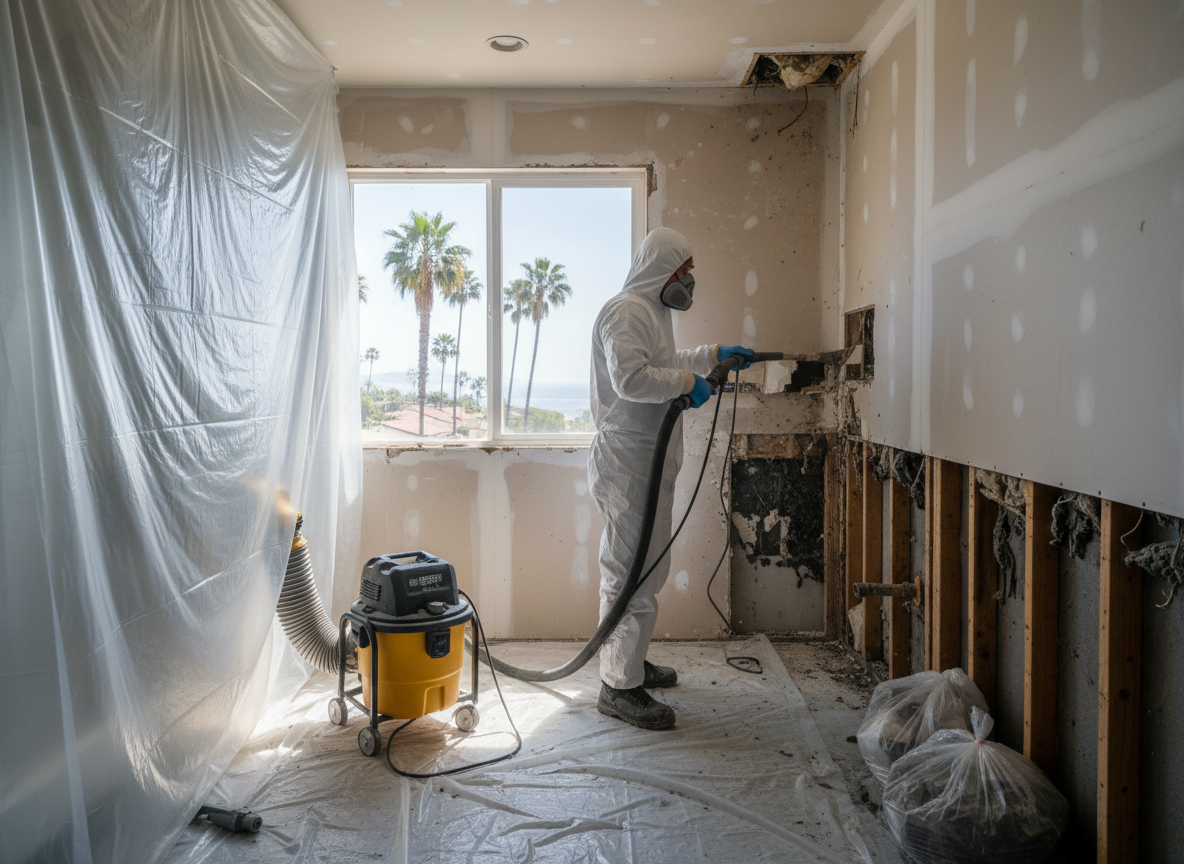
Corona Del Mar homes in neighborhoods like Corona del Mar Village and Corona Highlands often feature older wood framing and crawl spaces that trap moisture during the cool, wet winters typical of Orange County's mild Mediterranean climate. Abatement crews focus on source removal in these tight spaces, using negative air machines and HEPA filtration to keep spores from migrating into living areas while summer's warm, dry conditions help dry out the structure afterward.
Edge cases arise near the Corona del Mar Bluff Path and Sherman Library and Gardens where salt air accelerates corrosion on metal HVAC components, allowing hidden mold growth behind walls. Technicians inspect for these patterns by pulling baseboards and checking insulation in attics, paying special attention to properties backing up to Newport Beach or Laguna Beach where fog and ocean humidity add extra moisture load.
Proper containment is critical in these hillside lots because terrain can direct runoff toward foundations during winter storms. Crews seal work zones with plastic sheeting and monitor humidity levels throughout the process to prevent cross-contamination into adjacent rooms or neighboring homes in the same block.
Technician insight
In Corona Del Mar, the thing that catches most people out with mold abatement is the salt air creeping into older crawl spaces along the bluff. Homeowners often seal up the vents thinking it will keep moisture out, but that traps the winter rain longer and lets mold spread across the joists before anyone notices.
Hidden Growth in Corona del Mar Village Crawl Space
A homeowner noticed a musty smell after heavy winter rains. Inspection revealed mold on insulation and floor joists fed by a slow roof leak. Crews contained the space, removed the damaged materials, and dried the area over several days, restoring safe conditions without disturbing the rest of the house.
How it works
- 1
Inspection and Moisture Mapping
Technicians walk the property to locate visible growth and use moisture meters on walls, floors, and ceilings in crawl spaces and attics common to Corona Del Mar homes.
- 2
Containment Setup
Plastic barriers and negative air machines isolate the affected zones to keep spores from spreading through the house or into nearby rooms.
- 3
Source Removal
Moldy materials are cut out and bagged for disposal while HEPA vacuums clean remaining surfaces in the Corona del Mar Village and Irvine Terrace areas.
- 4
Drying and Clearance
Dehumidifiers and air movers dry the space, followed by post-remediation testing to confirm levels are safe before reconstruction begins.
Pricing
Upfront quotes after on-site inspection; final cost depends on square footage affected, access difficulty in older homes, and any hidden growth behind walls or in crawl spaces.