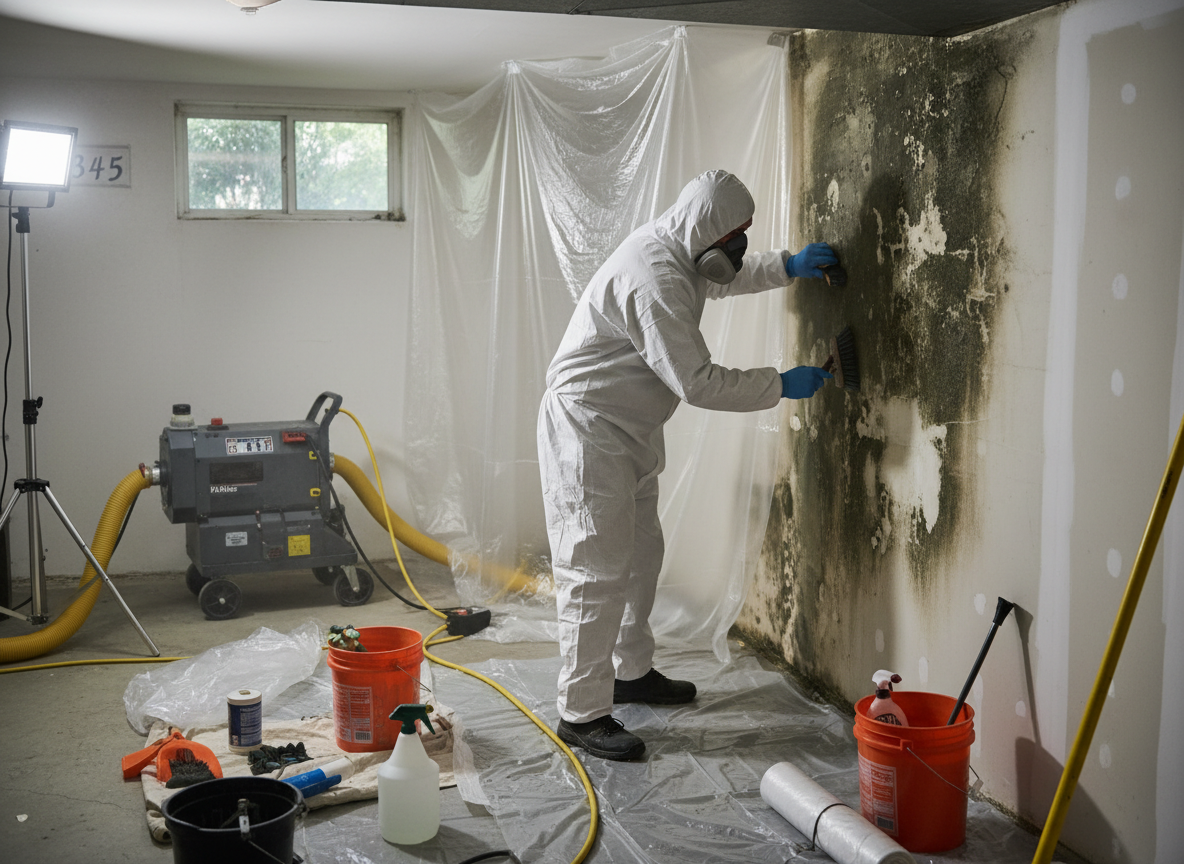
Corona Del Mar homes built before the 1980s often feature single-pane windows and minimal vapor barriers, allowing cool winter fog and rain to drive moisture into wall cavities along the bluff. During the wet season, leaks around roof valleys near Sherman Library and Gardens frequently feed hidden colonies in attics before any visible staining appears on ceilings. Technicians must pull baseboards and use moisture meters on stucco exteriors to locate saturation that standard visual checks miss.
The dry summer months create a false sense of security as surface growth dies back while roots remain in insulation and subflooring. In neighborhoods like Corona Highlands, slab-on-grade construction combined with irrigation overspray keeps soil moisture high year-round, pushing mold upward through expansion joints. Remediation here requires negative-air machines running continuously to prevent spore migration into adjacent living spaces shared with Newport Beach and Laguna Beach properties.
Homeowners attempting DIY removal with household fans commonly spread spores into HVAC returns that serve multiple rooms. Professional protocols include sealing off the work zone with 6-mil poly sheeting and HEPA scrubbing before any demolition begins. Post-remediation verification uses both visual inspection and air sampling to confirm levels have returned to normal outdoor baselines typical for Orange County coastal air.
Technician insight
In Corona Del Mar, the thing that catches most people out with mold cleanup near me is how the cool wet winters push moisture under the stucco in homes along the Bluff Path without any roof leak showing inside until the drywall is already saturated.
Attic Growth After Winter Rains
A Corona del Mar Village homeowner noticed a musty smell in upstairs rooms following several weeks of rain. Inspection revealed mold on roof sheathing above a bathroom vent that had been drawing moist air into the attic. The crew contained the space, removed the affected insulation and sheathing sections, dried the remaining structure, and restored airflow. Odors disappeared and the home passed clearance testing.
How it works
- 1
Initial Assessment
Technician arrives within hours, maps moisture with meters, and identifies the water source affecting the property.
- 2
Containment Setup
Plastic barriers and negative air machines isolate the work area to stop spores from traveling through the home.
- 3
Material Removal
Affected drywall, insulation, and baseboards are cut out and bagged for disposal following local disposal rules.
- 4
Drying and Cleaning
Air movers and dehumidifiers dry remaining structure; HEPA vacuums and antimicrobial wipes treat surfaces.
- 5
Final Verification
Independent moisture readings and optional air sampling confirm the space meets clearance standards.
Pricing
Pricing varies with the square footage affected, depth of hidden growth, and whether HVAC cleaning is required.