Corona Del Mar homes built on the bluffs near Corona del Mar State Beach and along the Corona del Mar Bluff Path often trap moisture from the cool wet winters typical of the mild Mediterranean climate. Older stock in Corona del Mar Village and Irvine Terrace commonly features original plaster and lath walls plus crawl spaces that stay damp when summer fog rolls in from Newport Beach and Laguna Beach. These conditions let mold colonize behind baseboards and in HVAC returns before homeowners notice musty odors.
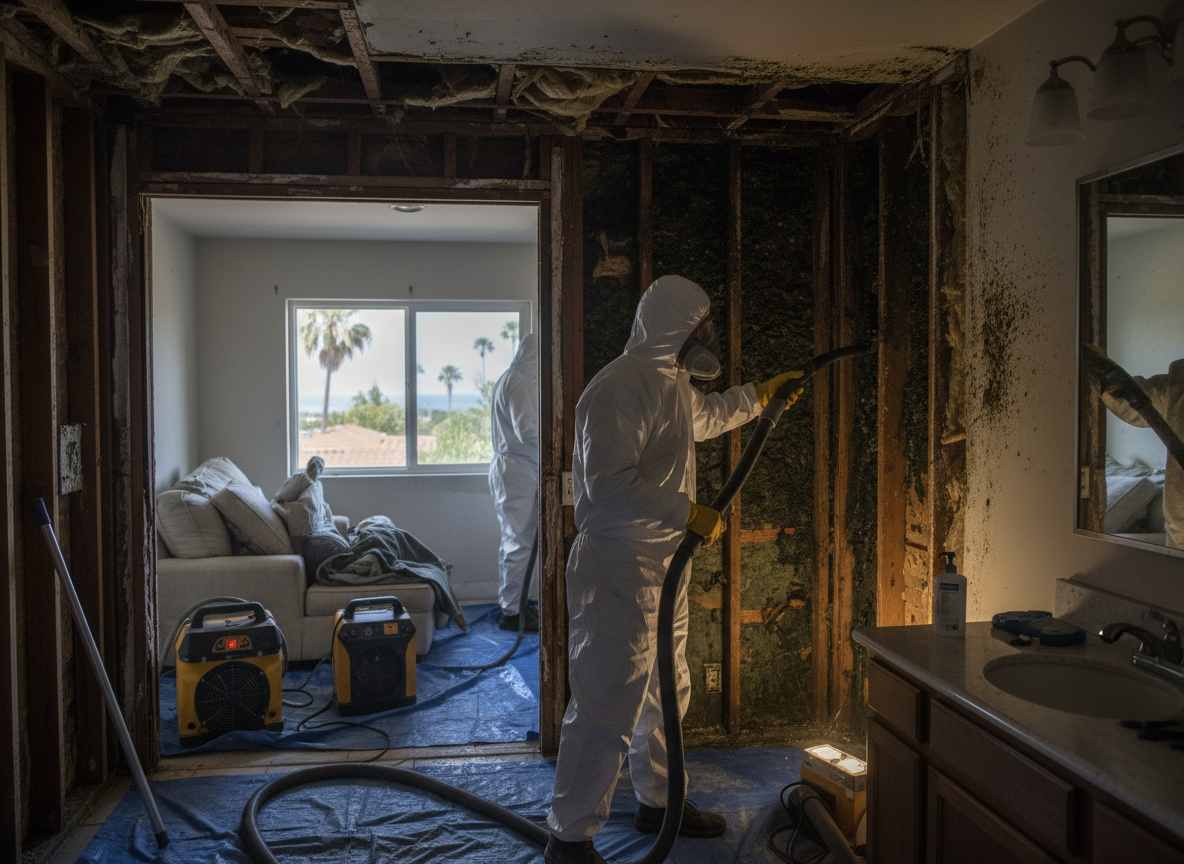
Remediation crews working in Corona Highlands must separate affected zones with negative air machines because the dense coastal vegetation and hillside terrain limit natural airflow. Containment barriers protect adjoining rooms while HEPA filtration captures spores that would otherwise drift toward Sherman Library and Gardens. Technicians remove saturated drywall and insulation rather than surface-treat only, then apply antimicrobial agents formulated for saline air exposure.
After removal, dehumidifiers run until wood moisture content drops below 12 percent to prevent regrowth during the next wet season. Crews document every step with photos because Orange County inspectors sometimes review work in bluff-top properties where drainage issues recur. Final clearance testing confirms spore counts match outdoor levels before barriers come down.
Homeowners along Pacific Coast Highway should schedule inspections after heavy winter rains because roof leaks at tile junctions often feed hidden growth in attics above living spaces in Corona del Mar Village.
Technician insight
In Corona Del Mar, the thing that catches most people out with mold remediation company is the way salt-laden air from Corona del Mar State Beach corrodes metal ductwork during our cool wet winters, letting spores travel through the entire HVAC system even when the visible patch is small.
Hidden Growth After Winter Rain
A homeowner in Corona Highlands noticed a musty smell after heavy January rains. Inspection revealed water had entered at a roof valley and traveled behind plaster in the master bedroom wall. Crews contained the room, removed the saturated lath and plaster, dried the framing, and treated the cavity before reinstalling new drywall.
How it works
- 1
Initial Assessment
Technician inspects all suspect areas in the home using moisture meters and borescopes to map hidden growth.
- 2
Containment Setup
Plastic barriers and negative air machines isolate the work zone to keep spores from spreading to unaffected rooms.
- 3
Material Removal
Saturated drywall, insulation and trim are cut out and bagged for disposal while HEPA vacuums capture airborne particles.
- 4
Drying and Treatment
Dehumidifiers and air movers dry the structure, followed by antimicrobial application on remaining surfaces.
- 5
Clearance and Prevention
Air sampling confirms safe levels, then recommendations address ongoing moisture sources such as roof valleys or foundation cracks.
Pricing
Project cost depends on square footage affected, accessibility in bluff homes, and whether HVAC cleaning is required.