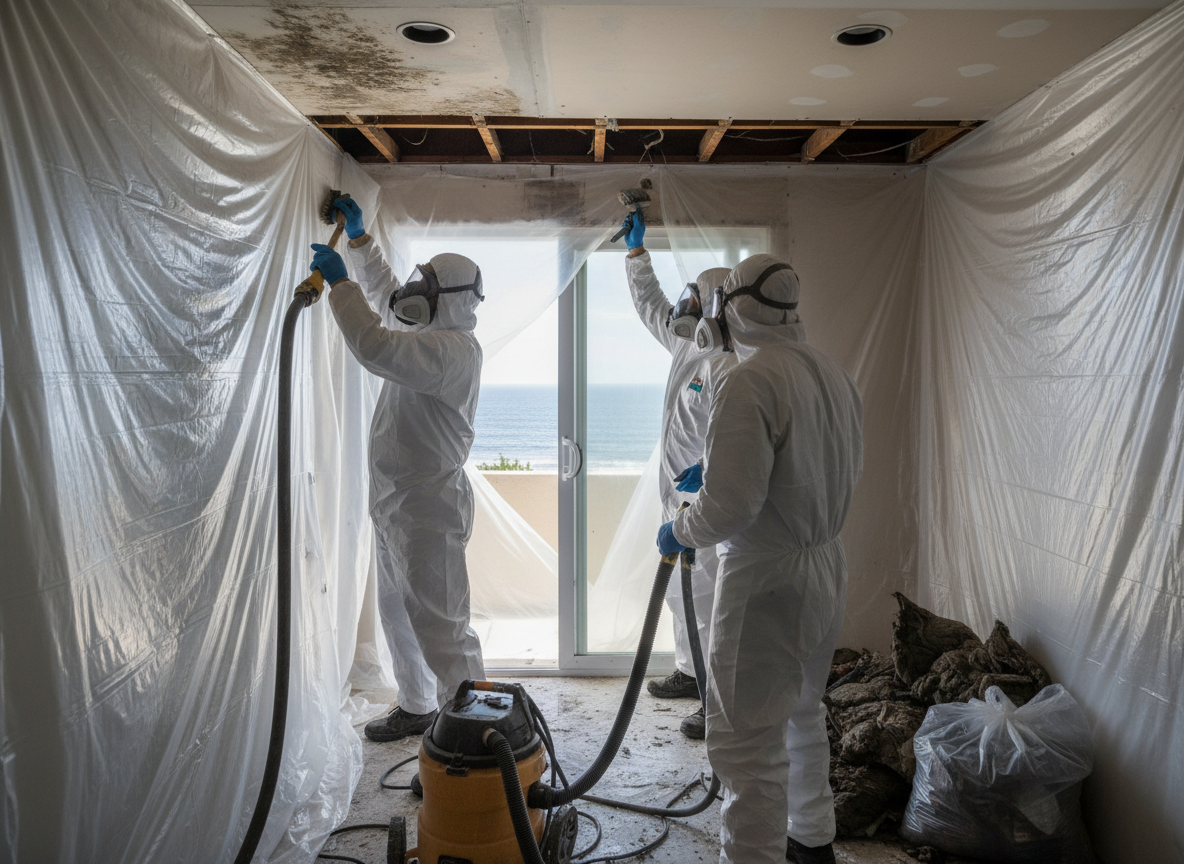
Corona Del Mar homes in neighborhoods like Corona del Mar Village and Irvine Terrace often face hidden moisture from the mild Mediterranean climate's cool wet winters. Older single-story and two-story residences near Corona del Mar State Beach and the Bluff Path commonly develop mold in crawl spaces and attics where ocean air meets roof leaks or poor ventilation. Professional mold removal starts with identifying these entry points before any surface treatment to avoid spreading spores into living areas.
Work in Corona Highlands requires extra care around stucco exteriors and older plumbing that can leak slowly into walls during winter rains. Technicians isolate affected zones using physical barriers and negative air pressure to protect adjacent rooms, then remove saturated materials rather than simply cleaning surfaces. This approach prevents recurrence when summer dryness masks ongoing issues that only appear again after the next wet season.
Nearby influences from Newport Beach and Laguna Beach mean salt air accelerates corrosion on metal components inside HVAC systems, creating additional condensation points that feed mold growth. Professional removal includes clearing these hidden pockets and advising on ventilation upgrades suited to the local terrain and bluff exposure without relying on generic solutions.
Final clearance testing confirms spore levels have returned to normal background counts before any reconstruction begins. This step is essential in coastal Orange County properties where returning humidity can restart growth within days if not fully addressed.
Technician insight
In Corona Del Mar, the thing that catches most people out with professional mold removal is how salt air from the nearby Pacific accelerates corrosion inside wall cavities of 1960s and 1970s homes in Corona Highlands, turning small roof leaks into widespread hidden growth that only shows after the first winter rains.
Hidden Growth Behind Stucco in Irvine Terrace
A homeowner noticed musty odors after winter rains but no visible stains. Inspection found water tracking from the roofline into a wall cavity near the Bluff Path. We contained the room, removed saturated drywall and insulation, treated the framing, and confirmed clearance with sampling before repairs. Odors disappeared and no regrowth occurred the following season.
How it works
- 1
Site Assessment
Inspect all accessible areas including attics, crawl spaces, and wall cavities in Corona Del Mar homes for visible growth and moisture sources tied to winter rains.
- 2
Containment Setup
Seal off work zones with plastic sheeting and negative air machines to keep spores from migrating into unaffected parts of the residence.
- 3
Material Removal
Cut out and dispose of mold-affected drywall, insulation, and wood while HEPA vacuuming remaining surfaces.
- 4
Drying and Treatment
Apply antimicrobial solutions and use dehumidifiers to bring moisture levels below thresholds that support regrowth in the local climate.
- 5
Verification
Perform air and surface sampling to confirm the space meets clearance standards before any rebuilding.
Pricing
Upfront quotes provided after on-site inspection based on extent and access challenges.