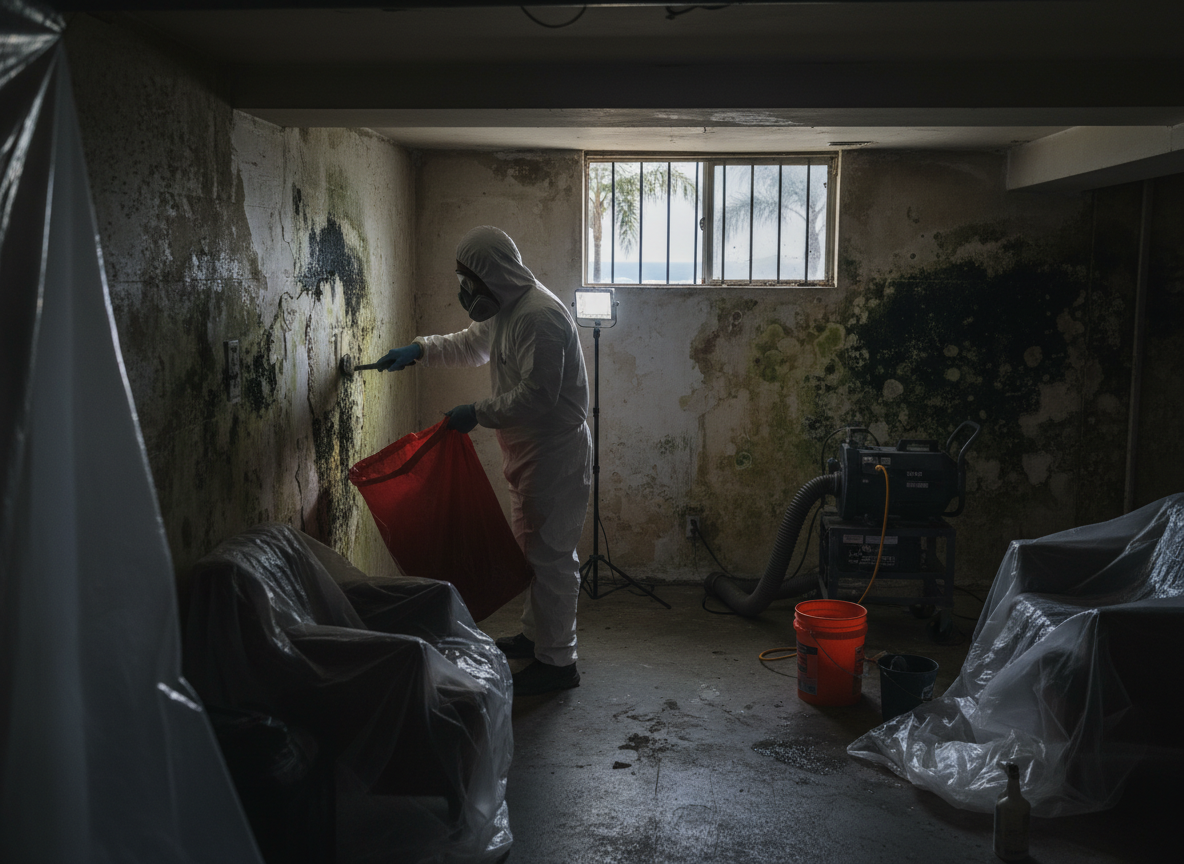
Corona Del Mar's cool wet winters often push moisture into crawl spaces and attics of homes built in the 1950s through 1970s, especially in Corona del Mar Village and Corona Highlands where original wood framing and single-pane windows still exist. When rain soaks the soil near foundations along the bluff, it migrates through stucco cracks and creates hidden colonies behind drywall that standard fans miss. We use negative air machines and moisture meters calibrated for salt air to locate growth before it spreads to HVAC returns common in these single-story ranches.
Irvine Terrace properties sit on steeper slopes where drainage can fail during heavy winter storms, allowing water to pool against garage slabs. This leads to toxic mold on subflooring that only appears after homeowners notice a persistent earthy smell near Sherman Library and Gardens. Removal requires cutting out affected joists without disturbing load-bearing beams, followed by antimicrobial rinses that won't corrode the metal fasteners typical in Orange County coastal builds.
Near Corona del Mar State Beach and the Bluff Path, salt-laden air accelerates corrosion on metal ducts, making mold colonies harder to kill once they embed in insulation. We isolate rooms with 6-mil poly sheeting, run HEPA scrubbers for 48 hours minimum, and dispose of contaminated materials at approved Orange County facilities rather than local landfills.
Winter Moisture Patterns
Wet winters followed by dry summers create cycles where mold dries out but reactivates with the next rain, so we always check for past water stains even in summer calls from Newport Beach and Laguna Beach residents.
Technician insight
In Corona Del Mar, the thing that catches most people out with toxic mold removal is how our cool wet winters let moisture sit in the crawl spaces of 1960s homes in Corona Highlands long after the rain stops, so surface cleaning alone never solves it.
Hidden Growth After Winter Storms
A homeowner in Irvine Terrace noticed a musty odor after several wet weeks. We found toxic mold on subfloor insulation where drainage from the slope had failed. We contained the garage area, removed the affected wood and insulation, treated the joists, and cleared the space after retesting.
How it works
- 1
Initial Assessment
We arrive 24/7, test air and surfaces with moisture meters, and map visible plus hidden growth in crawl spaces and attics.
- 2
Containment Setup
Plastic barriers and negative pressure machines isolate the work zone to keep spores from reaching living areas in older Corona del Mar homes.
- 3
Material Removal
Cut out affected drywall, insulation, and wood, then bag and remove it while HEPA vacuuming all surfaces.
- 4
Final Clearance
Post-remediation testing confirms levels are safe before we restore access and advise on ventilation fixes for wet winters.
Pricing
Pricing varies by square footage affected and whether hidden growth behind walls requires extra demolition in pre-1980 homes.