Corona Del Mar homes built before the 1980s in neighborhoods like Corona del Mar Village and Irvine Terrace often have original ductwork routed through unconditioned attics. Cool wet winters allow condensation to collect inside metal ducts while warm dry summers create temperature swings that push moisture deeper into insulation. When homeowners notice musty air from vents, the source is frequently behind registers or in the return plenum near the Corona del Mar Bluff Path where salt air speeds corrosion of galvanized metal.
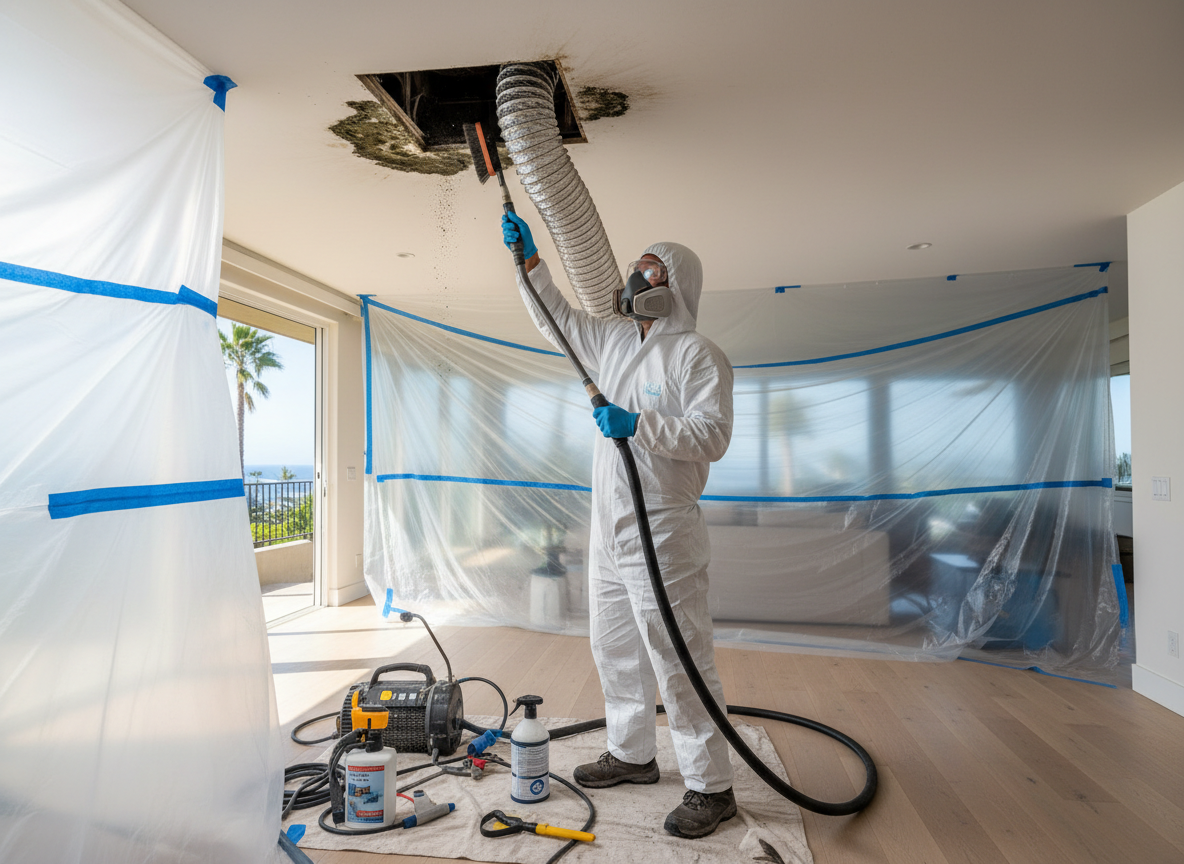
Remediation starts with isolating the HVAC system so spores do not spread to living spaces. Technicians remove and clean accessible duct sections, then apply EPA-registered antimicrobials to non-porous surfaces. In older Corona Highlands homes, fiberglass-lined ducts may require full replacement because porous lining traps mold beyond surface cleaning. Post-remediation, we verify negative pressure and install new filters rated MERV-13 or higher to match local pollen loads from nearby Newport Beach and Laguna Beach.
Edge cases include crawl-space returns that pull moisture from Orange County coastal soils and bathroom exhaust fans venting into attic spaces rather than outdoors. These setups allow mold to colonize fan housings and flex duct connections. Homeowners sometimes attempt DIY fogging, which drives spores deeper into the system and triggers code violations during real-estate inspections common in the area.
Technician insight
In Corona Del Mar, the thing that catches most people out with ventilation mold remediation is attic ductwork in pre-1980 homes near Sherman Library and Gardens. The cool wet winters let condensation sit inside flex connections while salt air from the beach corrodes seams, so what looks like a simple vent cleaning often turns into replacing entire runs once we open the system.
Hidden Mold in Attic Returns
A homeowner in Corona Highlands noticed musty air from the master bedroom vent after winter rains. Inspection showed water intrusion at the roofline allowing moisture into the return plenum. We isolated the system, removed saturated insulation, cleaned and treated the metal ducts, and rerouted the exhaust fan to terminate outside. The musty odor disappeared and the system passed clearance testing.
How it works
- 1
Initial Assessment
Inspect all accessible ducts, returns, and supply runs with borescopes and moisture meters while the system runs.
- 2
Containment Setup
Seal off the HVAC equipment and create negative pressure zones to prevent spore migration into living areas.
- 3
Source Removal
Remove contaminated insulation, clean metal surfaces, and replace porous duct sections where needed.
- 4
Verification and Prevention
Test for remaining moisture and mold, then recommend upgraded filtration and proper exhaust routing.
Pricing
Pricing depends on system size, number of returns, and whether duct replacement is required; we provide upfront quotes after inspection.