2026-10-17 ·
How Winter Rains Lead to Attic Mold in Corona Del Mar Homes
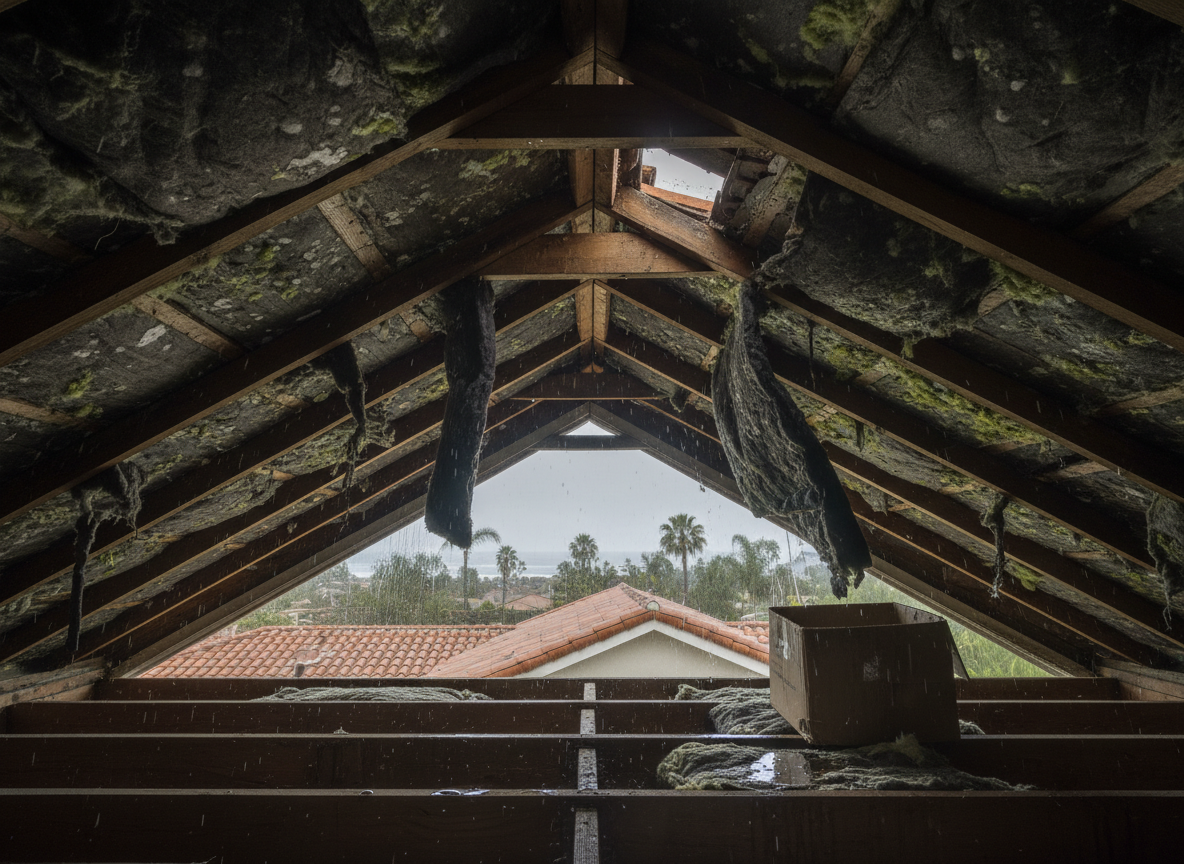
Winter rains trigger attic mold in Corona Del Mar homes when 10-15 inches of precipitation from December through March enters through roof vents, flashing, and aged shingles. Homes built before 1980 in Corona del Mar Village and Corona Highlands commonly lack modern ridge venting, so moisture lingers in the cool attic space long enough for spores to colonize within 48 hours.
Roof Entry Points Common in Local Housing Stock
Many single-story and two-story homes along the Corona del Mar Bluff Path and in Irvine Terrace feature composition roofs installed 25-35 years ago. These roofs develop cracked flashing around chimneys and skylights during the first heavy storms of the season. Once water reaches the attic insulation, it pools against the plywood sheathing where daytime temperatures stay 10-15 degrees cooler than the living space, creating the exact humidity level mold needs to spread across 100 square feet or more in under a week.
Salt air from Corona del Mar State Beach accelerates corrosion on metal vent covers and pipe boots, widening small gaps that summer dryness had kept sealed. Residents notice the first signs when dark stains appear on ceiling drywall near bathroom exhaust fans that vent directly into the attic instead of through the roof.
How the Mediterranean Climate Extends Drying Time
The mild Mediterranean pattern of cool wet winters followed by warm dry summers means attics rarely reach the 80-degree temperatures needed to evaporate trapped moisture before the next storm arrives. In Corona Del Mar, relative humidity inside unvented attics can remain above 70 percent for weeks after a January rain event. This extended damp period allows Aspergillus and Penicillium species to produce visible colonies on roof sheathing and truss lumber before homeowners detect any musty odor downstairs.
Nearby Laguna Beach and Newport Beach experience the same seasonal lag, but Corona Del Mar’s slightly higher elevation along the bluffs creates additional wind-driven rain that pushes water under eave vents more aggressively than in flatter inland sections of Orange County.
Practical Inspection Steps After Winter Storms
After each major rain, check attic access points during daylight hours for wet insulation or darkened wood. Use a bright flashlight to scan along the roof deck for water trails that start at plumbing vents and travel downward. Document any areas larger than a quarter where the sheathing feels soft to the touch, because those spots indicate active moisture that will support mold within days.
Homeowners who find discoloration should schedule attic mold testing and removal before the next rain cycle. Early testing prevents spores from migrating through HVAC returns into living areas during the warmer months when windows stay closed.
Ventilation Limitations in Salt-Air Homes
Standard gable-end vents installed decades ago in Corona Highlands often corrode shut from salt exposure, reducing airflow below the 1 square foot per 150 square feet of attic floor recommended for moisture control. Adding ridge vents during a re-roof can cut drying time after winter rains from weeks to days, but many older homes still rely on the original static vents that fail during sustained 20-mile-per-hour onshore winds.